
Wilkin County Has No Official Multi-Day Arrest Blotter
No Wilkin County Sheriff, jail, or city police page lists every arrest for a fixed 72-hour or weekly window. None does. The Sheriff and jail publish the official current-custody roster. It covers people in the jail right now rather than an archive. Breckenridge Police offers a records-request route instead of a public arrest table. Campbell and Wolverton list no municipal arrest feed.
A person drops off the roster after release or a transfer. Someone admitted days earlier can still be listed. The "In Custody" timestamp marks when the view was generated, not the date range of any multi-day report.
How to Read Wilkin County Arrest Reports
A good multi-day search works backward from official current records. Write down each source's date. Never treat a current roster row and a week-old article as the same record.
- Check the official LETG roster for present custody and note its generated timestamp.
- Compare the intake date, booking number, MNI, charges, and bail or bond details across the full row.
- For a released person or older arrest, ask the arresting agency or Wilkin County Sheriff’s Office for the specific report or booking record.
- Use the Wilkin District Court and Minnesota court systems to follow hearings, documents, and disposition, subject to search limits.
- Consult dated news or unofficial archives only as leads, record their publication dates, and verify each claim with the agency or court.
For a fresh custody check, see the Arrested Today guide. Mind its cautions about processing lag.
Fields Found Across Wilkin County Arrest Records
There is no official blotter entry format. Each source varies. The current jail roster has the steadiest booking structure, while reports, court files, and news stories may add or drop details.
| Field or source detail | Meaning and limitation |
|---|---|
| Name, sex, and age | Identity details as entered in the source. Same-name matches require more evidence. |
| MNI and Booking # | Local jail identifiers useful for matching and a precise records request. |
| Intake Date | Time of jail intake, not necessarily the time of arrest or the alleged event. |
| Charges and statute | Charges or custody basis recorded at booking. They may change later. |
| Bail\Bond | Displayed financial or release conditions, not proof of release or final case status. |
| Photo | The official roster may display a booking image. A copied archive or news image is not automatically current or official. |
| Agency and location | May appear in an incident report or news account, but not every roster row establishes where an arrest occurred. |
| Court disposition | The later procedural outcome, found through court sources rather than inferred from booking data. |
Note: A current custody row may involve a contract detainee, so it is not always proof of an arrest by a Wilkin County agency.
Weekend and Holiday Arrest Report Gaps
Wilkin County posts no weekend or holiday update schedule. Nothing is promised. A Monday batch, a nightly refresh, or a fixed delay could all mislead you. The live roster shifts as jail staff process arrivals and releases, while court calendars and news coverage move on their own clocks. A quiet page proves nothing.
No verified "weekend surge" statistic exists for the county either. The value of a multi-day window is patience. It lets separate records surface at their own pace rather than assuming arrests cluster on certain days. Counts from an outside publisher reflect that publisher's database alone. They are not county crime statistics.
Older Wilkin County Arrest Reports and Retention
The official roster says nothing about its historical depth. Nobody publishes the moment a released person rolls off it. Minnesota's county retention schedule is different. It describes adult jail register books holding names, commitment numbers, admission and discharge details, offenses, sentences, and discharge information. It marks that series for permanent retention or transfer to the State Archives. That is a records-management rule. It promises no searchable web row or booking photo.
For an older booking, ask the Wilkin County Sheriff or jail custodian. Request the booking record, register entry, or photo. Name the person. Give the approximate intake and discharge dates, MNI, Booking #, and any court file number. If the record left the county, ask which retention series applied. Ask also whether it was transferred or disposed of. Call the Minnesota Historical Society or State Archives only after the county confirms a transfer.
Question: Does permanent retention of a jail register guarantee an old mugshot? Answer: No. The schedule governs the ledger series. A specific digital image must be confirmed with its custodian.
Unofficial Wilkin County Arrest Archives
Once a booking slides off the Wilkin County jail roster, third-party archives are one place people look. They are not official records. Treat them as leads, not proof of anything. Entries can sit stale, double up, or linger long after the county's own record changes. The RecentlyBooked Wilkin County page is one such publisher. It advertises a 30-day view with updates several times a day, though that pacing belongs to the site, not to the sheriff. The dated JailRosters.org Wilkin PDF is another unofficial snapshot of arrests. That file can hold roster-style fields, including an image slot. It says nothing about who is in custody now. Skip copying booking photos from either source. A third listing of the same unofficial county index shows how a secondary publisher labels its Wilkin County arrest material.
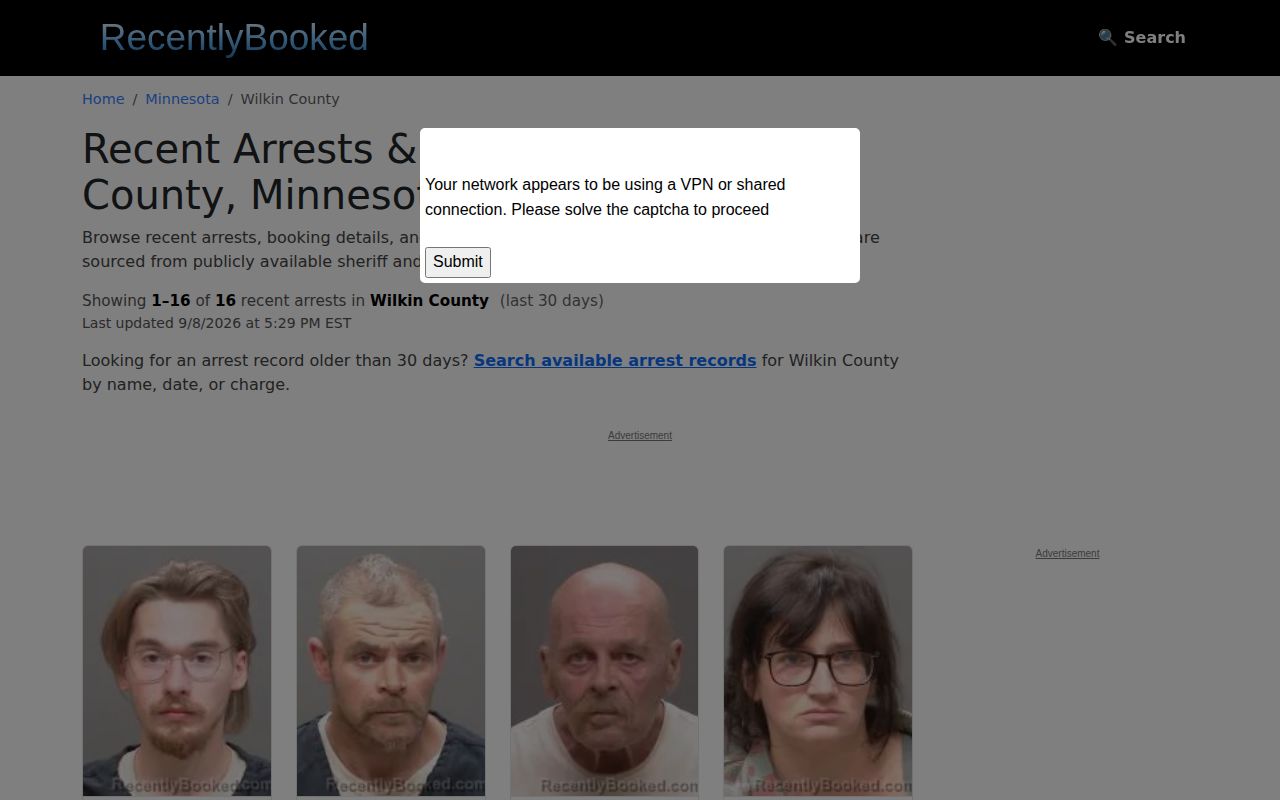
This image points to the outside source and its limits. It verifies no record.
Wilkin County Arrest News Is Event-Driven
Newsrooms in the Red River Valley cover Wilkin County incidents one event at a time, not as a full booking sequence. Valley News Live has reported on Breckenridge police matters. InForum and KVRR have both covered major Wolverton events. Bring Me The News draws on Wilkin Sheriff releases. Breckenridge Police points residents to the Wahpeton Daily News for local coverage, though that paper runs no standing arrest blotter.
A news story can come from agency statements, court papers, or interviews. Its picture may be a scene photo. Early reports often hold back names. Details can shift as the case moves forward. The InForum Wilkin County report shows how event coverage works, leading readers from a New Year's Day shooting investigation toward the detention and court records that follow. Pair any news item with the official roster, the agency, and the court file.
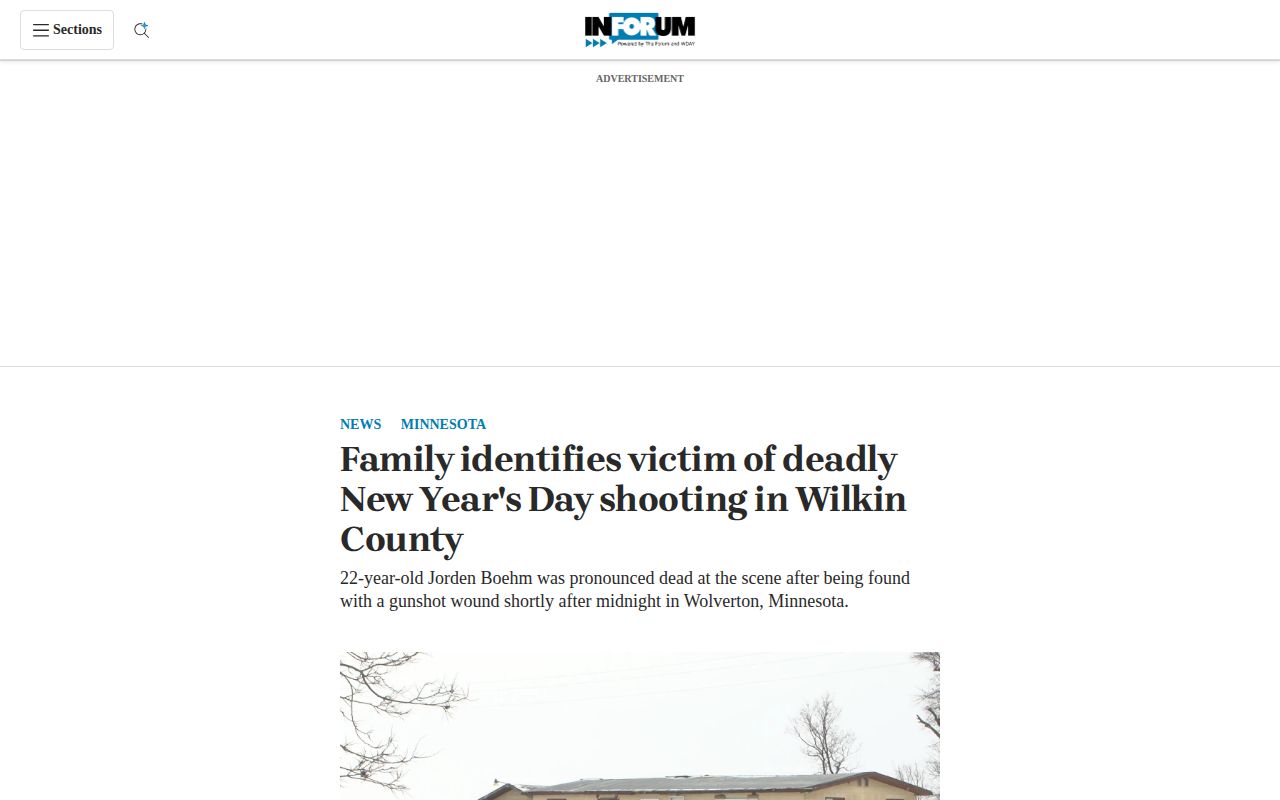
Note: The page view shows the news trail, which stays secondary to the agency and court record on any Wilkin County case.
From a Wilkin Incident Report to the Court Record
The January 2026 Wolverton coverage shows why a single incident can stretch across several systems. It can span several days too. One event may leave a paper trail in three places. There is the law-enforcement report. There is the jail's detention record. Then come the court filing and any follow-up news. Each surface appears on its own schedule.
Build the timeline by logging the source and date at every stage. That covers the incident and the arrest or citation. It covers jail intake if it happened, plus release or transfer. Log the charging decision, the hearing, and the outcome too. When two accounts disagree, trust the agency record for agency actions and the court record for the case itself. The Wilkin County recent arrest hub maps the county-wide paths for booking photos, records requests, warrants, and court follow-up.
Arrest Reports Record Accusations, Not Guilt
A Wilkin County roster entry, incident report, archived page, or news article documents that an event was reported. Details can change after the fact. Charges get amended or dropped. Identity information gets corrected. A person may walk out of jail with no public explanation. Keep the source dates, and follow the case through to the court's final word.
A few terms help keep the record straight. Booking is jail intake. Arraignment is a court stage. Bond covers release conditions. Disposition is how the court resolves the case. Keeping these labels distinct stops a routine arrest report from being mistaken for the end of the story.